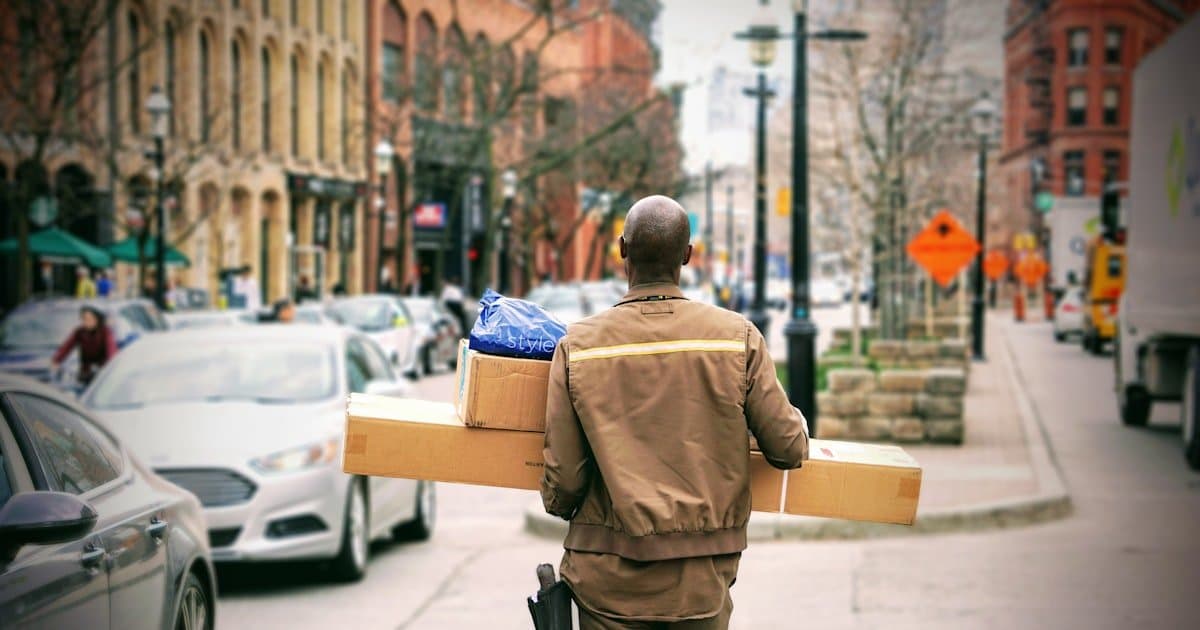
Proof of delivery is the record that shows a consignment reached the right place, at a known time, and was accepted by someone. In its paper form it is a signed note that lives in a van for a week and occasionally arrives back at the office. In its electronic form it is a signature or photo captured on a phone, stamped with the time and the verified position of the vehicle, and available to look up in seconds. The difference between the two is not convenience. It is whether you can win an argument three weeks later.
What a complete proof of delivery contains
| Element | What it proves | Weak on its own |
|---|---|---|
| Signature or name | Someone accepted the goods | Illegible, or the person denies it |
| Photo | Condition, and where it was left | No location or time context |
| Timestamp | When it happened | Can be entered later or wrongly |
| GPS position | The vehicle was genuinely there | Does not prove the handover itself |
| Geofence arrival and departure | How long the stop actually lasted | Needs the site boundary defined |
Each element is arguable in isolation. Together they are not, which is the entire point. A signature with a timestamp that matches a geofenced arrival at the customer’s own address is very difficult to dispute in good faith.
What paper costs you
Fleets running paper delivery notes usually accept four costs without ever pricing them.
- The delay. Proof exists in a van, not in the office, so a dispute raised on Tuesday cannot be answered until the vehicle comes back.
- The loss rate. A percentage of notes never return, and those are disproportionately the ones somebody later asks about.
- The admin. Somebody scans, files and searches for them, and that time is invisible because it is spread across a week.
- The invoicing lag. On contracts where proof triggers billing, missing paperwork directly delays payment.
The fourth is the one that usually justifies the change on its own, because it is a cash flow issue rather than an operational annoyance.
How tracking data strengthens the record
Electronic proof of delivery on a phone is a big improvement over paper. Combining it with vehicle tracking closes the remaining gap, because the two records verify each other.
Geofences produce arrival times nobody has to record
Draw a boundary around each regular delivery location and the system logs entry and exit automatically. That gives you the arrival time, the departure time and therefore the dwell time at every stop without a driver pressing anything. The technique is covered in what geofencing is for fleets.
Position confirms the capture happened where it claims
A signature captured two kilometres from the delivery address is worth knowing about. It is usually innocent, such as a phone with a stale location or a delivery to a gate rather than a building, but occasionally it is not, and either way you find out.
The journey record fills the gaps
When a photo is missing or a signature is illegible, the route history still shows the vehicle arrived, when, and how long it stayed. That is frequently enough to settle a dispute where the customer’s claim is simply that nobody came.
What good practice looks like at the doorstep
- Capture something at every stop, without exception. A record that exists for eighty percent of deliveries is the one that will be missing for the delivery that matters.
- Photograph unattended drops. Where goods are left, the photo is the whole record, and it should show enough context to identify the location.
- Capture at the point of handover, not at the end of the round. Batched entries at the depot destroy the timestamp’s value.
- Record refusals and failed attempts too. A documented failed attempt is as valuable as a successful delivery when the invoice is questioned.
- Make it fast. If the capture takes longer than thirty seconds, drivers will start skipping it under time pressure.
What it changes beyond disputes
Fleets adopt electronic proof of delivery to stop arguments, then find two other uses.
The first is customer service. When arrival times are recorded automatically, you can tell a customer where their delivery is without phoning the driver, which removes a large share of inbound calls. That is the mechanism behind much of last mile delivery tracking.
The second is measurement. Automatic arrival times make on-time delivery rate a real number rather than an estimate, and dwell time at each stop becomes visible. Long dwell times at particular customers are one of the most common hidden costs in delivery operations, and nobody finds them without this data. Both feed the measures in fleet management KPIs, and dwell time is often the input that makes route optimization work properly.
Frequently asked questions
What is proof of delivery?
It is the record showing that goods reached the correct place and were accepted, typically a signature or photo with a timestamp. Electronic versions add the vehicle’s verified position, which makes the record far harder to dispute.
What is electronic proof of delivery?
It is proof of delivery captured on a phone or handheld device instead of paper, usually including a signature or photo, an automatic timestamp and location data, and available in the office immediately rather than when the vehicle returns.
Is a GPS record enough as proof of delivery on its own?
It proves the vehicle was at the location for a given period, which is strong evidence but not complete. Pairing it with a signature or photo captured at the stop covers both the presence and the handover.
How long should proof of delivery records be kept?
Long enough to cover the period in which invoices and claims can still be raised against you, which is usually months rather than weeks. Disputes have a habit of arriving well after the delivery they concern.
Does proof of delivery speed up payment?
On contracts where proof triggers invoicing, yes, because the record is available the moment the delivery happens rather than when the paperwork returns to the office. That is often the clearest financial argument for moving off paper.
Settle the next dispute with a record
Arrival times, dwell times and route history are already being generated by every tracked vehicle you run. Get a Fleetile demo and see how the Fleetile platform turns them into proof.