
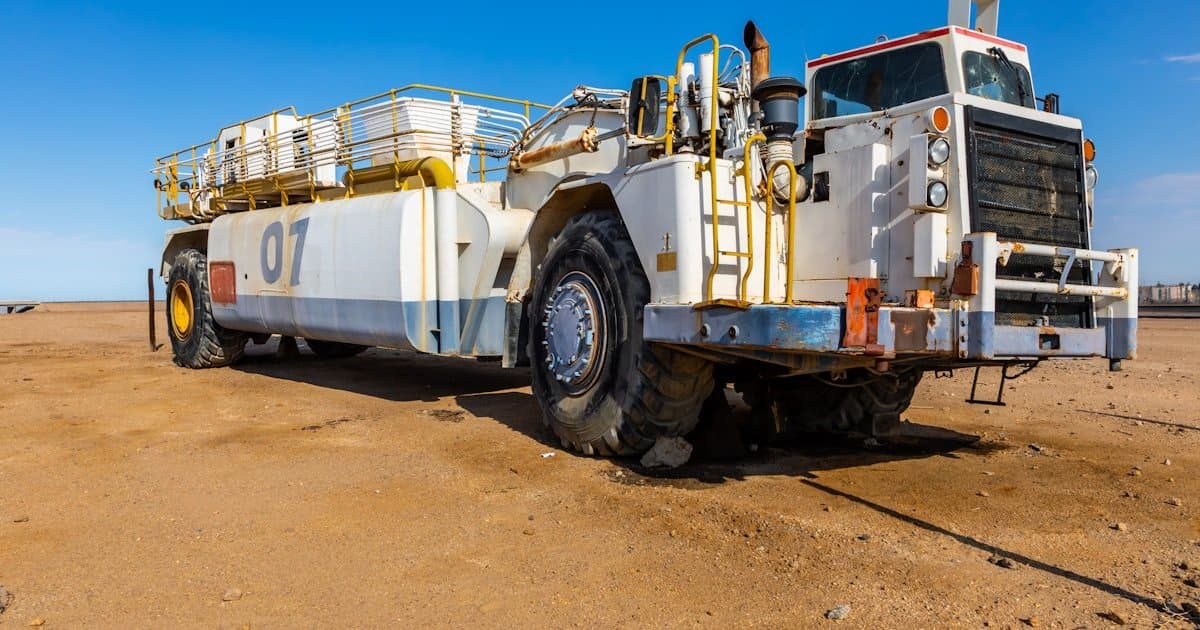
Few fleets work harder or further from help than the ones that serve oil and gas. Light vehicles cover long distances between sites on roads that are often unmade, heavy units haul equipment and water, and a large share of the work happens where there is no supervision, patchy mobile coverage and no quick way to reach someone who gets into trouble. Oil and gas fleet tracking exists to close that gap: to know where every vehicle is, to know that the people in them are safe, and to be able to prove both to a client who requires it.
Why oil and gas fleet tracking is different
Most industries track vehicles to control cost. Energy fleets track vehicles to control risk first and cost second, and that changes what the system has to do.
The distances are longer, so a vehicle that stops reporting is a genuine concern rather than an inconvenience. The roads are worse, so speed limits on lease roads exist for rollover risk rather than traffic. The work is often solo, so a driver who does not arrive needs to be noticed by something other than the next person expecting them. And the contracts usually carry health and safety obligations that have to be demonstrated with records, not described in a meeting.
The underlying platform is the same one any fleet uses. What differs is which parts carry the weight: journey monitoring, speed and fatigue management, and an auditable record.
The problems it solves
Lone workers on long journeys
A vehicle travelling several hours to a remote wellsite is the industry’s most ordinary and most exposed situation. Journey monitoring turns it into something visible: the expected route and arrival time are known, the vehicle reports as it goes, and a stop that lasts longer than it should, or an arrival that does not happen, raises an alert rather than passing unnoticed until someone calls.
This is the part that most often justifies the whole system internally. It is not about productivity. It is about someone knowing, within minutes rather than hours, that a vehicle is not where it should be.
Speed and driving standards on lease roads
Unmade access roads are where the serious incidents happen, and they are the least supervised part of the network. Setting a speed limit for a defined area and being alerted when it is exceeded turns a rule in an induction pack into something measurable. Driver scoring built from harsh braking, acceleration, cornering and speeding gives supervisors specific events to coach against instead of a general warning that changes nothing.
Fatigue and hours behind the wheel
Long shifts and long drives combine badly. Trip records show actual time behind the wheel and actual rest between journeys, which is the difference between a fatigue policy that is written down and one that can be checked. It also removes the argument, because the hours come from the vehicle rather than from a timesheet filled in afterwards.
Fuel loss in remote locations
Fuel is drawn a long way from any office, often into equipment that is not itself tracked. Comparing fuel drawn against distance actually travelled, per vehicle, is the only practical way to see a pattern. Idling reports catch the other half of the loss: units left running for hours because switching off is inconvenient. Our guide to reducing fuel theft covers what to do once a discrepancy appears.
Proving compliance to clients and auditors
Operators increasingly require their contractors to demonstrate journey management and driving standards, not simply assert them. Exportable trip histories, speed records and driver scores turn an audit from a scramble into a report. The same records settle disputes about when a vehicle arrived on site and how long it was there.
Key features for energy fleets
| Feature | Why it matters in oil and gas |
|---|---|
| Live GPS tracking | Know where every light vehicle and heavy unit is across a wide operating area. |
| Geofencing | Wellsites, yards, camps and restricted zones, with entry and exit alerts. |
| Journey and arrival alerts | Notice a vehicle that has not arrived or has stopped too long, without waiting for a phone call. |
| Speed alerts by area | Enforce lower limits on lease roads than on highways. |
| Driver scoring | Coach against specific harsh events rather than general warnings. |
| Trip history and reports | Hours driven, rest between journeys, site time and distance, all exportable. |
| Remote engine cut | Immobilise a vehicle taken without authorisation, once it is stationary. |
| Battery asset trackers | Cover generators, trailers, bowsers and equipment with no power of their own. |
Rolling it out
Energy fleets tend to run mixed equipment bought at different times from different suppliers, so the first question is usually compatibility rather than features. A platform that works with devices already fitted saves replacing units that are doing their job perfectly well.
- Start with the light vehicle fleet. It covers the most distance, carries the most people and represents the largest share of journey risk.
- Geofence the sites, including camps and any area with its own speed rule, before turning alerts on.
- Set journey alerts for overdue arrival and extended unplanned stops, and decide who receives them out of hours. An alert nobody is assigned to is not a control.
- Brief the drivers first. Explain that journey monitoring exists so that somebody notices when they do not arrive. That framing is accurate and it is also the one that gets accepted.
- Add heavy units and towed assets once the light fleet is running.
- Review weekly, starting with speed exceedances and overdue arrivals rather than with cost reports.
Safety is the case, cost is the dividend
Most energy fleets adopt tracking for safety and compliance, then find the operating savings afterwards: less idling, fewer unnecessary trips, fuel that can be reconciled, maintenance scheduled on real engine hours rather than a calendar, and site time that can be billed accurately. Those savings are real, but they are not what gets the system approved, and it is worth being honest about that when making the case internally.
For related sector reading, see fleet tracking for construction, which shares the plant and equipment problem, and GPS tracking for logistics and delivery for the road transport side.
Bringing it together
Oil and gas fleet tracking does three jobs at once: it makes lone journeys visible so nobody is missing without anyone knowing, it turns driving standards into something measurable rather than assumed, and it produces the record that clients and auditors ask for. The Fleetile platform brings that into one live map with managed hardware and works with over 200 GPS devices, so a mixed fleet does not have to be re-equipped to be brought under one system.
Frequently asked questions
What is oil and gas fleet tracking?
It is GPS tracking and telematics applied to the vehicles and equipment that serve energy operations: light vehicles, heavy units, tankers, trailers and generators. Alongside ordinary location tracking it is used for journey monitoring on long remote drives, speed enforcement on lease roads, fatigue records and the compliance evidence that operators require from contractors.
Does tracking work where there is no mobile coverage?
The device keeps recording when signal drops and transmits the stored readings once it reconnects, so the trip history fills back in. What is lost during a gap is the live view, not the record. For journey monitoring this matters: set expected arrival times so that a vehicle out of contact for longer than the known dead zones raises an alert.
Can we set different speed limits for site roads and highways?
Yes. Speed rules can be attached to a defined area, so a lease road or camp can carry a lower limit than the highway leading to it, with alerts raised against whichever limit applies where the vehicle actually is.
How does it help with journey management?
The expected route and arrival time are recorded, the vehicle reports as it travels, and exceptions raise alerts: an arrival that has not happened, a stop longer than expected, or a departure from the intended area. It replaces the practice of calling to check with being told when something is wrong.
Can we track equipment that has no engine?
Yes, using battery-powered asset trackers that wake on movement. This is how generators, bowsers, trailers and site equipment are covered without a power connection.
Will it work with the trackers we already have?
Usually. Fleetile works with over 200 GPS devices and has no hardware lock-in, which matters for energy fleets because equipment is rarely bought all at once from one supplier. Send the device models and we will confirm before anything is committed.
See it on your fleet
The clearest way to judge oil and gas fleet tracking is to watch it run. Get a Fleetile demo and see live tracking, geofencing, journey alerts and driver scoring working together on real vehicles.