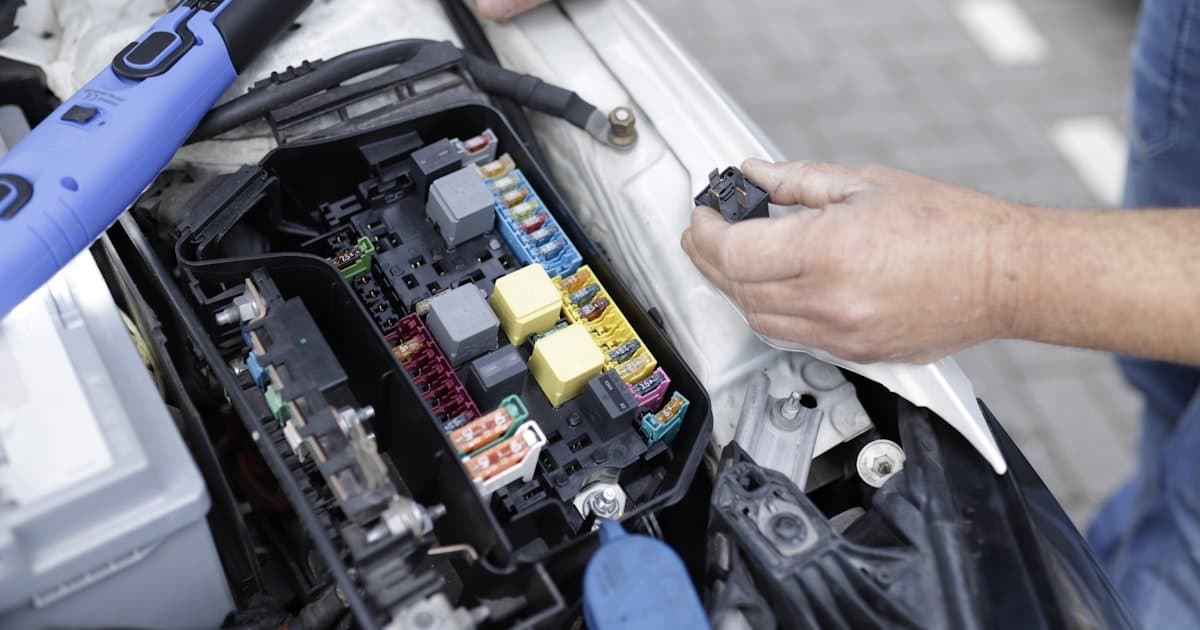

An OBD2 GPS tracker is a tracking device that plugs into the diagnostic port under a vehicle’s dashboard. It takes power from that port, reads data from the vehicle’s own systems, and starts reporting within a minute of being fitted. No wiring, no fitter, no vehicle off the road. That convenience is the whole case for it, and the same convenience is the whole case against it, because anything that plugs in that easily also unplugs that easily.
What the OBD port is
Since the early 2000s, cars and light commercial vehicles have carried a standardised diagnostic connector, usually within reach of the driver’s knees. Mechanics use it to read fault codes. A tracker uses it for three things at once: a constant power supply, a physical mount, and a data connection to the vehicle.
That third one is the interesting part. Because the port speaks to the vehicle’s own systems, a plug-in device can often report engine data that a simple position tracker cannot see at all, including fault codes, engine running state and, on many vehicles, fuel level and coolant temperature.
What an OBD2 tracker does well
- Installation in under a minute. No appointment, no downtime, no fitter cost per vehicle.
- Removal in under a minute. This is a feature when the vehicle is leaving your fleet, sold, or returned to a hire company.
- Engine data for free. Fault codes and engine state come from the vehicle rather than being inferred, which makes maintenance scheduling more accurate.
- No warranty argument. Nothing is cut, spliced or wired, which matters on a leased or financed vehicle.
- Easy to move. A pool car fleet can shift devices between vehicles as the fleet changes.
What it does badly
Three weaknesses, and they are not minor.
It is visible
The port is a known location. Anyone who wants the device gone will find it in seconds, and a driver who resents being tracked does not need tools or knowledge. A good device sends a disconnect alert immediately, which turns removal into an event you know about rather than silence you misread as a parked vehicle. Devices without that alert are close to useless in any scenario involving an unwilling driver.
It is exposed to knees and feet
The port sits in the footwell area. Devices there get kicked, caught on bags, and occasionally knocked loose without anyone noticing. It is a mundane failure mode that fleets consistently underestimate.
It suits only some vehicles
Heavy trucks and buses often use a different diagnostic standard, and unpowered assets such as trailers and containers have no port at all. Motorcycles generally have no accessible port either, so the plug-in route is off the table for a large part of many mixed fleets.
OBD2 versus hardwired
| OBD2 plug-in | Hardwired | |
|---|---|---|
| Fitting time | Under a minute | Typically under an hour |
| Fitting cost | None | Labour per vehicle |
| Concealment | None, the location is known | Good, position is your choice |
| Removal by driver | Trivial | Difficult and obvious |
| Engine data | Often extensive | Varies with how it is wired |
| Suits | Cars, vans, rentals, pool fleets | Owned commercial vehicles, theft risk |
Both are legitimate. The choice is not about quality, it is about whether concealment matters more than convenience. The wider comparison across all four device types is in telematics devices.
When to choose OBD2
- Rental and hire fleets. Vehicles cycle in and out constantly and fitting labour would dominate the cost. Covered further in vehicle tracking for car rental.
- Leased or financed vehicles. No wiring means no conversation with the lessor about modifications.
- Pool cars driven by employees who know about the tracking. Concealment is not the point when the arrangement is open.
- Trials. Testing a system across ten vehicles for a month is far easier when installation is reversible.
When to choose something else
- Theft recovery is the main reason for buying. A thief looks at the port. Choose hardwired and hidden. See preventing vehicle theft in your fleet.
- Drivers have reason to object. If tampering is a realistic risk, do not put the device where a foot can reach it.
- Trucks, buses, trailers or motorcycles. Different connector or no connector.
- You need certainty of continuous coverage. A device that can be unplugged at will is not the foundation for a compliance or contractual record.
What to check before buying
- Does it send an alert the moment it loses power? This is the single most important feature on a plug-in device.
- Does it have internal storage so a coverage gap does not delete the journey?
- Does it include a real motion sensor for harsh braking and acceleration, or does it infer them from position? Inferred events produce unfair driver scores.
- Does it fit your vehicles without an adapter, and does it sit flush enough not to catch a knee?
Frequently asked questions
What is an OBD2 GPS tracker?
It is a tracking device that plugs into the standard diagnostic port under a vehicle’s dashboard, drawing power from the port and reporting position, movement and engine data without any wiring or professional installation.
Can an OBD2 tracker be removed easily?
Yes, in seconds and without tools, which is its main weakness. Choose a device that sends an immediate alert when it loses power so a removal is something you find out about rather than mistake for a parked vehicle.
Does an OBD2 tracker drain the car battery?
A well-designed device draws very little and enters a low-power state when the vehicle is off. Battery problems normally involve an already weak battery or a vehicle left unused for weeks rather than the tracker alone.
Will an OBD2 tracker work on any vehicle?
It works on most cars and light vans built since the early 2000s. Heavy trucks and buses often use a different diagnostic standard, and motorcycles, trailers and unpowered assets generally have no suitable port, so those need a different device type.
Is an OBD2 tracker better than a hardwired one?
Neither is better in general. Plug-in devices win on installation speed and reversibility, which suits rentals, leased vehicles and trials. Hardwired devices win on concealment and tamper resistance, which suits owned fleets and anywhere theft is the concern.
Try it on your own vehicle
The fastest way to judge a device type is to see what it reports. Get a Fleetile demo and compare plug-in and hardwired data side by side on the Fleetile platform.