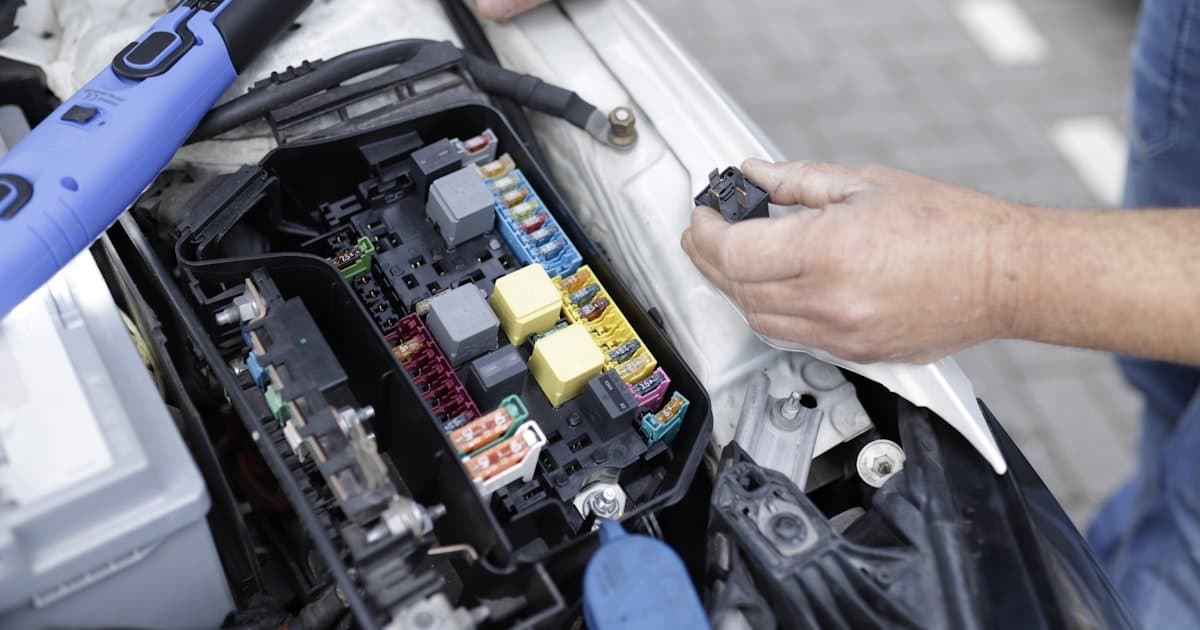

A telematics device is the unit fitted to a vehicle that records where it is and what it is doing, then sends that record to your software. It is the least discussed part of a tracking system and the part that sets the ceiling on everything else, because software can only report what the device bothered to measure. There are four types in common use, and the right one depends less on budget than on what the vehicle is and what you need to prove.
You will also see these called telematics units, telematics hardware or telematics equipment. They are the same thing. This guide covers the four types and how to choose between them; if you want to know what is physically inside one and how a record travels from the vehicle to your screen, see how telematics works.
The four types
| Type | How it fits | Best for | Main limitation |
|---|---|---|---|
| OBD plug-in | Into the diagnostic port under the dashboard | Cars and light vans, short-term fleets, rentals | Visible and removable in seconds |
| Hardwired | Wired to the vehicle’s power, hidden | Owned fleets, anything where theft matters | Needs a fitter and an hour per vehicle |
| Battery powered | Magnet or bolt, no wiring | Trailers, containers, unpowered assets | Reports less often to save battery |
| Camera integrated | Hardwired, with road and cab views | Fleets managing accident risk and disputes | Higher cost per vehicle and more data |
Most fleets end up with two of these rather than one. A mixed fleet with trucks, trailers and a few pool cars is badly served by insisting on a single device across everything.
1. OBD plug-in devices
These push into the diagnostic port that every car and light van built in the last two decades carries, usually under the dashboard near the steering column. Because the port supplies power and vehicle data together, the device starts reporting the moment it is pushed in, with no wiring and no fitter.
That convenience is also the limitation. The port is in the cabin, in reach, and a device can be unplugged in the time it takes to bend down. For a rental fleet or a vehicle leaving in six months that is a fair trade. For a vehicle where theft is the reason you bought tracking, it is the wrong choice, because the first thing anyone taking the vehicle does is look for the tracker in the obvious place. Covered further in OBD2 GPS trackers.
2. Hardwired devices
These are wired directly to the vehicle’s power and hidden somewhere a casual search will not reach. They can be connected more deeply into the vehicle than an OBD unit, which is what makes engine data and remote commands possible, including immobilisation.
The cost is an hour of a fitter’s time per vehicle and a vehicle off the road while it happens. Fleets usually schedule these in batches for that reason. This is the default for anything owned rather than rented, and the only sensible option where remote immobilisation is part of the plan.
3. Battery-powered devices
These have no connection to the thing they are attached to at all. They are magnet-mounted or bolted on, and they wake on movement rather than reporting continuously, which is what lets them run for a long time on a sealed battery.
They answer one question well: where is it. They cannot answer how it was driven or how many hours the engine ran, because there is no engine to ask. That is not a shortcoming when the thing being tracked is a trailer, a generator, a bowser or a container, where location is the entire question. See trailer and container tracking and asset tracking systems.
4. Camera-integrated devices
A hardwired device with road-facing and often cab-facing cameras attached, so an event in the data has footage against it. When a harsh braking event is disputed, data says the brakes were applied hard and footage says a car pulled out. Only one of those settles an insurance claim.
The trade is cost per vehicle, more data to move and store, and a conversation with drivers that has to be had properly rather than sprung on them. See video telematics and dashcams.
What separates a good device from a cheap one
Two devices with the same spec sheet can produce very different data. Four things decide it.
Onboard storage
Coverage gaps are normal on any route that leaves a city. A device with memory keeps recording during the gap and uploads the backlog when the signal returns, so the journey record stays complete. A device without it simply loses those kilometres, which shows up later as a mysteriously short trip in a report somebody is relying on.
Sensible reporting logic
The device decides when to send. Good logic reports frequently while moving, rarely while parked, and immediately on an event. Bad logic reports on a fixed timer regardless, which either wastes mobile data or misses the short stop that the whole delivery dispute turns on.
A real accelerometer
Harsh braking, harsh acceleration and cornering come from motion sensing, not from position. Devices that infer these from GPS speed alone produce noisy, unfair driver scores, and drivers stop trusting the numbers very quickly. This matters more than most buyers expect, because behaviour data is where the safety and fuel gains sit. Our guide to driver behaviour monitoring covers what those events are used for.
Tamper detection
A device that reports when it loses power or is unplugged is worth substantially more than one that goes quiet. Silence is ambiguous; a disconnect alert is not.
Matching the device to the job
- Owned commercial vehicles. Hardwired, every time. It is hidden, it cannot be pulled out at a stop, and it can read more from the vehicle.
- Rental or short-term vehicles. OBD plug-in, because installation is measured in seconds and there is nothing to undo when the vehicle leaves the fleet.
- Trailers, generators, containers and site equipment. Battery devices, accepting that you get several position reports a day rather than a live line. That is enough to answer where the asset is, which is the actual question.
- Motorcycles. A compact hardwired unit with good tamper detection, since the theft risk profile is different. See motorcycle GPS trackers.
- High-risk or high-dispute operations. Camera integrated, where the footage settles what the data alone only suggests. Covered further in video telematics and dashcams.
Telematics devices in cars, and what factory-fitted units do not give you
Car fleets have an extra complication that trucks do not. Many newer cars leave the factory with a telematics unit already built in, and buyers reasonably ask why they should fit another one.
The built-in unit reports to the manufacturer, not to you. It exists to support breakdown assistance, servicing reminders and the maker’s own app. In most cases there is no route from it into a fleet platform, no way to see several brands of car on one map, and no access to the raw record when you need to prove something. It is a good feature and a poor fleet system.
An aftermarket device solves the problem the factory unit creates, which is that a fleet of five brands means five apps and no single view. For cars specifically:
- Owned company cars: hardwired, since the vehicle stays for years and private-versus-business mileage records matter.
- Employee or grey-fleet vehicles: OBD plug-in, because it can be removed cleanly when the arrangement ends and nothing has been altered in someone’s own car.
- Rental and pool cars: OBD plug-in, fitted and pulled in seconds as vehicles rotate.
Installation decides how much of this you actually get
A well-chosen device fitted badly performs like a cheap one. Three installation points matter more than any spec.
- Sky view. The device needs the antenna facing upward with as little metal above it as possible. Tucked under a metal bracket is the most common cause of poor position quality on an otherwise good unit.
- A permanent power source. Wiring into a circuit that dies with the ignition means the vehicle disappears whenever it is parked, which is exactly when theft happens.
- Somewhere not obvious. If the device is where a driver or a thief would look first, tamper detection is doing all the work on its own.
What a telematics device cannot do
Worth saying plainly, because a lot of buying disappointment comes from expecting one of these.
- It cannot report data the vehicle does not publish. Fuel level, engine hours and fault codes come from the vehicle’s own systems. On an older vehicle that does not publish them, no device and no software will produce them.
- It cannot fix a poor mounting position. An antenna under metal gives poor position quality regardless of how good the unit is.
- It cannot see inside the load. Temperature, door state and weight need their own sensors wired to the device, not just the device.
- It cannot identify who was driving unless a driver identification method is added, such as a key fob or a login. Without it, the data belongs to the vehicle rather than to a person, which matters before anyone builds a driver league table.
- It cannot make up for retention limits. If the platform keeps thirty days of detail, a question asked in month three has no answer no matter what the device recorded.
The cost that is not on the price tag
Device hardware is a one-off number that people compare carefully. The recurring numbers matter more over three years: the SIM and data plan, the software subscription, installation labour, and replacement for the units that fail or get damaged. A cheaper device that reports poorly also has a hidden cost, which is every decision you did not make because the data was not trustworthy. The full picture is laid out in what fleet GPS tracking costs.
Frequently asked questions
What is a telematics device?
It is the hardware fitted to a vehicle that records position, movement, engine state and motion events, then transmits them over the mobile network to tracking software. It is what turns a vehicle into a source of data.
What is the difference between an OBD and a hardwired telematics device?
An OBD device plugs into the diagnostic port and can be fitted or removed in seconds, which suits rentals and short-term use. A hardwired device is wired into the vehicle’s power and hidden, which suits owned fleets and anywhere the device needs to survive someone trying to remove it.
Do telematics devices drain the vehicle battery?
A correctly installed device draws very little and switches to a low-power state when the vehicle is parked. Battery problems usually come from an existing weak battery, a vehicle that sits unused for weeks, or an installation wired to the wrong circuit.
Can a telematics device be installed on any vehicle?
Effectively yes. Cars and vans generally take an OBD or hardwired unit, trucks and buses take hardwired units, and anything without its own power, such as a trailer or a generator, takes a battery-powered device instead.
How long does telematics installation take?
An OBD device takes under a minute. A hardwired device typically takes under an hour per vehicle for an experienced fitter, and it is usually scheduled in groups so vehicles come off the road together rather than one at a time.
What are telematics devices?
Units fitted to vehicles or equipment that record position and activity and send it to tracking software. Four types are in common use: OBD plug-in, hardwired, battery-powered and camera-integrated, and most fleets end up using more than one.
What are the main types of telematics device?
OBD plug-in for cars and short-term vehicles, hardwired for owned fleets and anywhere theft matters, battery-powered for trailers and equipment with no power of their own, and camera-integrated where footage is needed alongside the data.
Is telematics hardware the same as a telematics unit?
Yes. Telematics device, telematics unit, telematics hardware and telematics equipment all describe the same thing, the box fitted to the vehicle. The terms are used interchangeably by different suppliers.
Do I need a telematics device if my car already has one built in?
Usually yes, if you are running a fleet. The factory unit reports to the manufacturer rather than to you, so a mixed-brand fleet ends up with several apps and no single view. An aftermarket device puts every vehicle, whatever the badge or age, on one platform.
Can one telematics device cover a whole mixed fleet?
Rarely, and insisting on it is a common mistake. A fleet with trucks, trailers and pool cars is served properly by hardwired units on the trucks, battery devices on the trailers and OBD units on the cars, all reporting to the same platform.
Get the device choice right the first time
The wrong device is expensive to discover six months in. Get a Fleetile demo and see what each device type actually reports on the Fleetile platform before you commit a fleet to one.